Given by the artist to a neighbor.
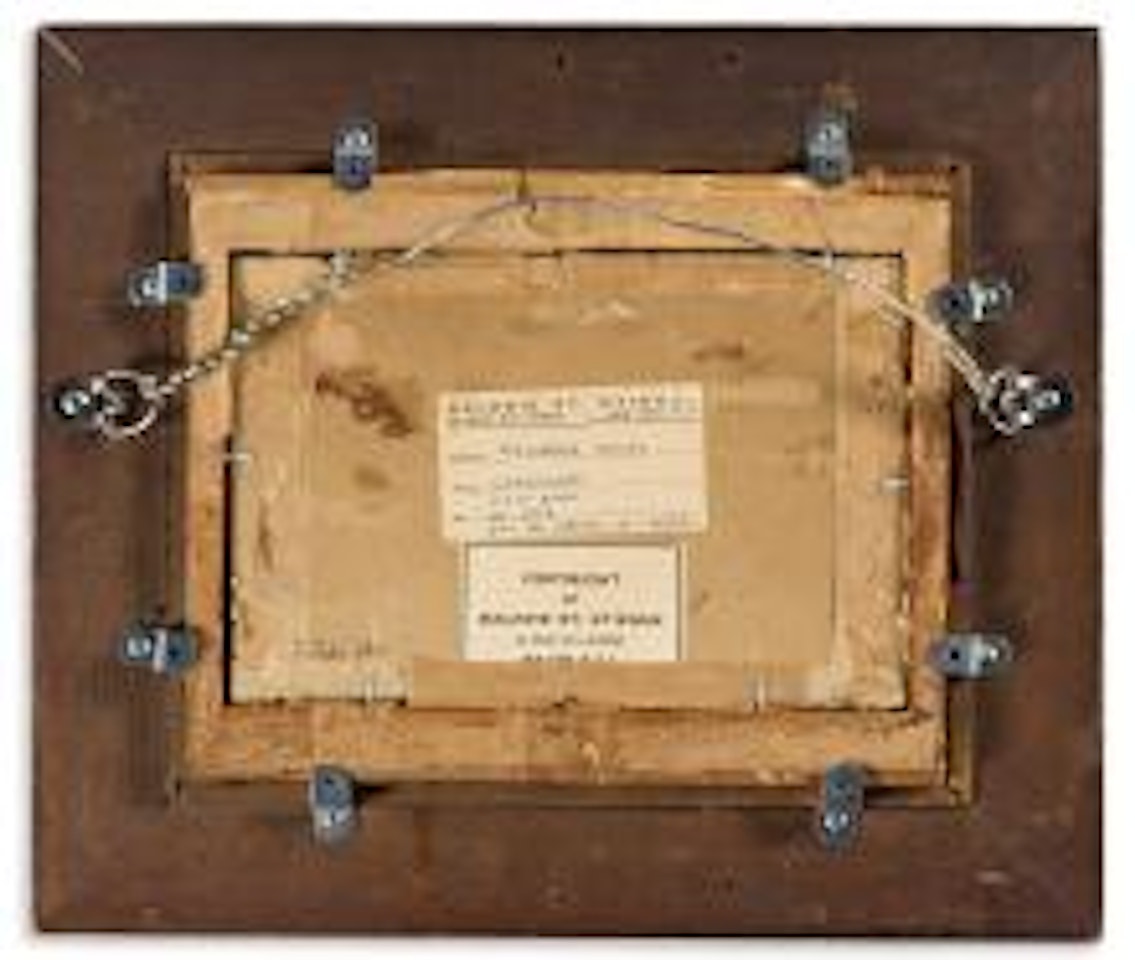
Galerie St. Etienne, New York (label).
Purchased from the above by private collection, New York, December 31, 1948.
Thence by descent to current owner, New York.
Before Louis J. Caldor"s discovery of Grandma Moses" work in 1938, Moses exhibited her paintings alongside her homemade preserves at county fairs or charity sales. During this early period, she did not have regular access to conventional art materials and painted on whatever support was available, sometimes small panes of glass. Caldor was an art collector and engineer from New York and encountered Moses" paintings in the window of a local drugstore in Hoosick Falls, New York. Caldor left the store with up to fourteen of Moses" paintings and became the artist"s devoted patron, sending her art supplies and inquiring at New York art galleries on her behalf. In October 1939, Caldor persuaded Sidney Janis to include three of Moses" paintings in the Museum of Modern Art"s "Contemporary Unknown American Painters." The following fall, gallerist Otto Kallir held Moses" first solo exhibition, "What a Farm Wife Painted" at Galerie St. Etienne. The exhibition caught the attention of the New York art scene amid the growing interest in folk art, and Moses became a critical success in the few short years that followed.